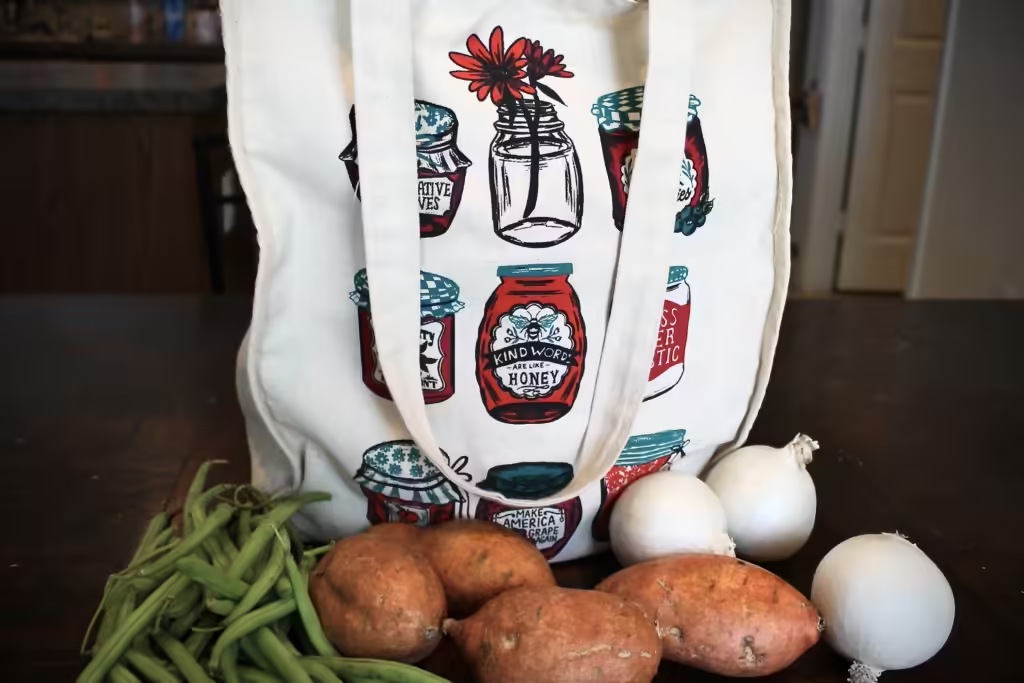
Help, I want to eat more traditionally but am afraid of how it will affect my budget! When starting a new way of eating, questions abound. Finding ways to improve the quality of your diet while staying budget-friendly seems daunting but can be done.
Currently my husband and I are in a season where he is in school and I work full-time. However, we are trying to save to start a family. Therefore, we avoid spending money whenever possible to practice living on less income while saving and investing in our future.
I am far from perfect when it comes to saving money, eating healthily, or where to spend money. However, I constantly try to improve in these areas. We are always looking for sales and deals. Sometimes we find real food cheap, or make food that we already have stretch into more meals. Below are the ideas we implemented.
Plan Out Food
Planning meals out for the week and buying food purposely sounds simple, but can cause difficulties with coordination, especially when there are two people cooking. This leads to food waste and increased expenses. To stick to our budget, we coordinate our farmers market and grocery purchases. When ordering from markets, I must know around the mid-week prior what to order. This ensures I have workable purchases for the next week. It also works best for our schedule to grocery shop for remaining needs on Friday. However, the market is Saturday morning. To minimize trips to the store and to optimize our use of regenerative foods we must know or guess our general famers market haul and meal plans in advance. This requires ordering in advance from our farmers when possible.
Work Together to Eat Traditionally on a Budget
It is easy for one person to forget about food in the fridge while cooking, or to pick up more food than necessary, which creates waste. Therefore, we try to judge how much food we have, and what we need to sustain two pretty healthy appetites for the week.
This does not necessarily mean a very specific meal plan. Rather it means knowing you have some vegetables that keep for as long as needed. For example, if you are making salad and you buy the leaves at the beginning of the week, they may go bad by mid-week and you will be out however much that salad cost. Instead, use the greens at the beginning of the week and potatoes or longer-lasting vegetables later that week.
Buy traditional foods on Sale/Ahead of Time
We also tend to browse sales at grocery stores and buy in bulk. This allows us to wait and purchase food when it is cheapest. For example, if grass-fed ground beef or chicken goes on sale, we pick up as much as possible. This lets us stock up our freezer. As a cheaper grocery store option, Aldis has more organic and higher quality options as well as more locally sourced foods compared to other stores, and at a lower cost.
Make condiments or salad dressings when possible
Some foods such as salad dressing may be worth making yourself. Easy dressings include combining some olive oil, herbs, and vinegar to make a good dressing. Buying healthy but expensive dressings that use good ingredients frequently costs more than homemade.
One tool I recommend is a good immersion blender, which is great for getting better consistencies in homemade condiments or for blending food in general. It is low cost and a good investment in your kitchen.
Buy Healthy Fats
Good, pasture-raised fats cost money but will give you more value for your money when it comes to nutrients. Aldis even has a reasonably priced “grass-fed”, salted butter and of course your local farmers will also have options. Toxins also accumulate in animals as they eat more and more toxic substances as compared to plants, especially in their body fats. Another word for this is bioaccumulation, with more information linked here.
Make Stock
Making stock allows for use of the bones out of any animal you eat. It allows you to use your vegetable scraps to a second round of good minerals and nutrients. Stock makes all your meals taste better and gives you good nutrients that you may not get from meat if really good meat or large amounts of meat are too expensive. One nutrient that it provides is collagen, which is wonderful for your hair, skin, joints, and general connective tissue.
Ferment
Making fermented vegetables, kefir, and drinks allow you to get health benefits and gut health that will help you digest food better and obtain more nutrients. All you require is a glass jar, water, and good natural salt (with minerals still in it along with the food to be fermented). Kefir may require a starter culture but will last as long as it is fed. It also allows you to avoid buying drinks such as sodas or Gatorade from the store. These drinks become pricey, both in the cost of your health and out of your pocket.
Cut Junk Food
Cutting out junk food eliminates many empty calories from your diet. Junk food addicts you and then provides you with empty calories, harming your health but keeping you hungry and needing more. Because junk food is filled with chemicals, it will keep you craving it again and again. Buying junk food allows you to purchase more unhealthy options at once, which leads to buying, eating, and spending more. Eating and purchasing foods that provide your family with no extra nutrition needs to be limited. Junk foods are not traditional or budget-friendly.
Make Low-cost Meals
Low cost meals include using whole chickens, since the carcass can be used afterwards to make soup or for making stir frys, which allow you to use whatever meat you have left. Liver used to be very cheap, but has become more popular recently. Although it has increased in price, it is still hard to beat the bang it provides for the buck in nutrients. However, kidney has become an option that provides you with those organ meat minerals. Kidney is less popular due to its purpose in the body making it undesirable for eating to many.
Leftovers
Eating more leftovers requires fewer ingredients bought during the week. And, repurposing leftover ingredients used in prior recipes that week decreases costs. Making a meal for multiple nights allows fewer foods bought on the grocery list for the week. This leads to less waste. Also, if you do buy a vegetable that you only need half of, you can go ahead and cook it and use it in a different dish the next night or create something special with it. Buying in bulk and using more of the same ingredients can also decrease the price. Leftovers are how to eat traditionally on a budget.
Eggs
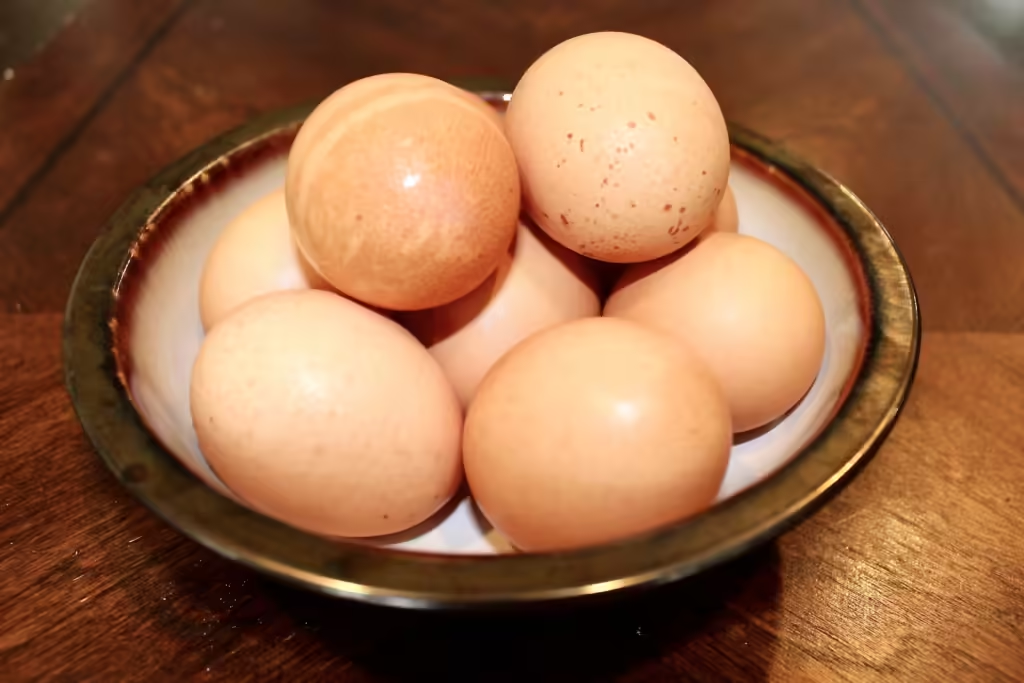
Eggs have good animal proteins, fats, and nutrients and are one of the first foods that we invested in when starting out. If you only want to start with changing a few items at a time, eggs from a farmers market or pasture-raised eggs give wonderful bang for your buck. Eggs are lower cost than the typical meat. They provide nutrients that are great for the brain and filling for the body. They also have versatility and are essential in many recipes.
Soups and Stews
These meals allow for you to throw whatever ingredients you would like into them and can include bone broth, which is very nutritious. They also stretch far as one can include rice, extra vegetables and meat, or bones that are leftover from other meals. You can change their flavor as much as you would like each time you make a new soup. This keeps you from getting bored, as there are endless options.
Baking
I hesitated to put sourdough on here—while it saves money and allows me to make many items that we used to buy such as bread, desserts, crackers, and tortilla, it is not for everyone. Some do not have time to allow for fermentation and to track the bread, especially those working full-time. It takes a good amount of planning. A good place for beginners to start is Breadtopia. The website has guidelines to creating a starter and good beginner sourdough bread recipes. When I began making sourdough bread, this website gave me good advice and recipes as well as ideas for tools to improve the ease of baking and bread quality.
However, baking your own treats with improved ingredients (they do not have to be perfect, but almost anything you make at home will be healthier than what you buy in the store, just read the ingredient lists!) Substituting regular flour for organic, or raw honey for sugar helps. Also, avoiding the chemicals put in to make baked goods shelf-stable can do wonders. Or even just doing one of the above improves your health.
Eat More Traditionally while on a Budget
At the end of the day, it may cost more to eat traditionally. However, there are many methods of improving costs that can help you to stretch your budget and get more nutrients into you and your family’s diet. With just a little time and planning, you can begin to shift into a healthier lifestyle with so many advantages. Do not see it as something to do all at once, but gradually make changes as foods and drinks run out in your household!


Leave a Reply