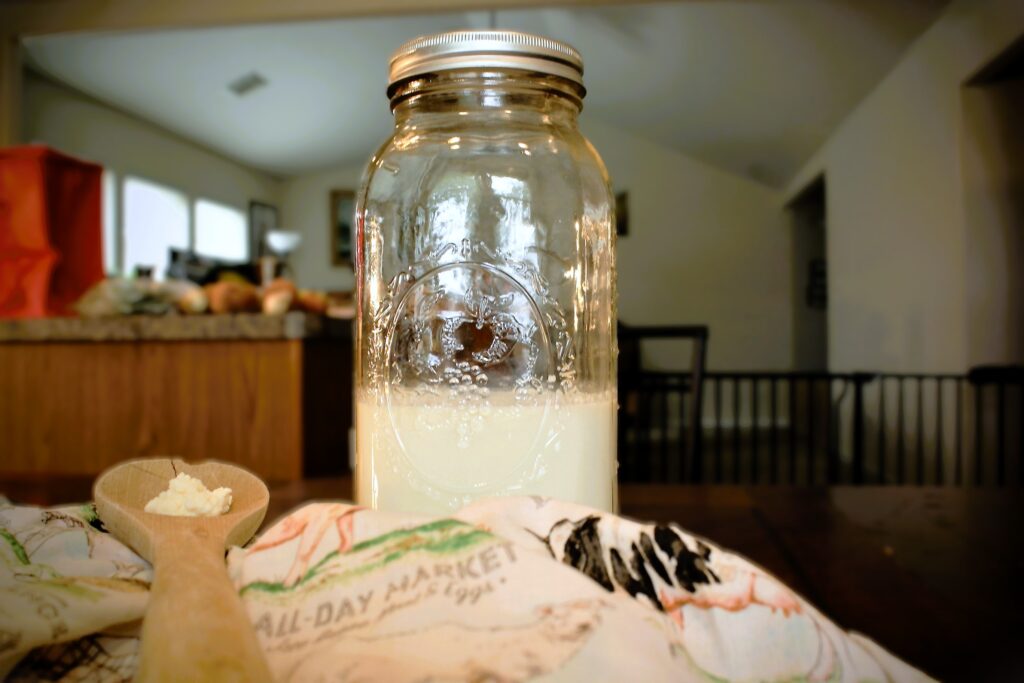
Easy, Simple Milk Kefir Recipe
Have you ever wondered what you could do with extra milk? Milk kefir is a great way to use extra milk or switch up your family’s diet. Or, maybe you or your family have a difficult time finishing off your milk before it goes bad.
Or, you are looking for ways to get more probiotics into your or your family’s diets without a fight. Perhaps your family wants to try foods other than yogurt or you just want to try some new recipes to keep it interesting for you to make and them to eat!
My husband voices his suspicion of every new fermented food I attempt, from vegetables to drinks to dairy, and kefir was no exception. He is always a good sport about trying them though, especially if I have eaten it first! He now likes to put it into his smoothies for a on-the-go, healthy breakfast. The smoothie keeps him full and helps regulate his digestion.
How is kefir different from yogurt?
Yogurt is a wonderful way to enjoy fermented milk but kefir provides different benefits. For example, yogurt is something I enjoy frequently, topped with my favorite fruits or as a dip for bread. However, kefir can have 2-3 times the probiotics. It also has up to 12 live and active probiotic cultures and a prolonged fermentation which increases its nutrient density. Kefir also has both bacterial and yeast microorganisms which gives the gut greater diversity.
What are the benefits of milk kefir?
- Gut health: consuming probiotics improves the health of your gut and allows for improved digestion
- Nutrients such as calcium, vitamin D, riboflavin, phosphorus, Vitamin B12, Vitamin A, potassium and selenium, with even more nutrients added through fermentation (B1, B12, and K)
- Bone health: calcium is abundant in dairy products, with some tests showing that it can be higher in raw dairy products
- Inflammation reduction: improving gut health can help reduce inflammation throughout the body
- Improved glycemic index: some tests show that bacteria digest some of the sugar in dairy and reduce spikes in blood sugar when drinking it
Are there benefits to making your own kefir?
- Knowing the ingredients you use and where they come from-often labels on products in the store contain words such as grass-fed or pasture raised. The food industry tweaks this language and uses it on products the average person would not define as grass-fed.
- Option to buy ingredients from farmers and people you trust, supporting small farms in a system that makes it difficult for them to survive
- Unpasteurized kefir: most dairy products come from a pasteurization process in stores. This means you get less probiotics and nutrients and a different taste and texture
- Pasteurization improves safety with conventionally raised dairy. It tends to be higher in bad bacteria and raised in poor, unhygienic conditions, requiring it to be pasteurized for safety. The question is, do you want to consume this dairy?
What creates kefir?
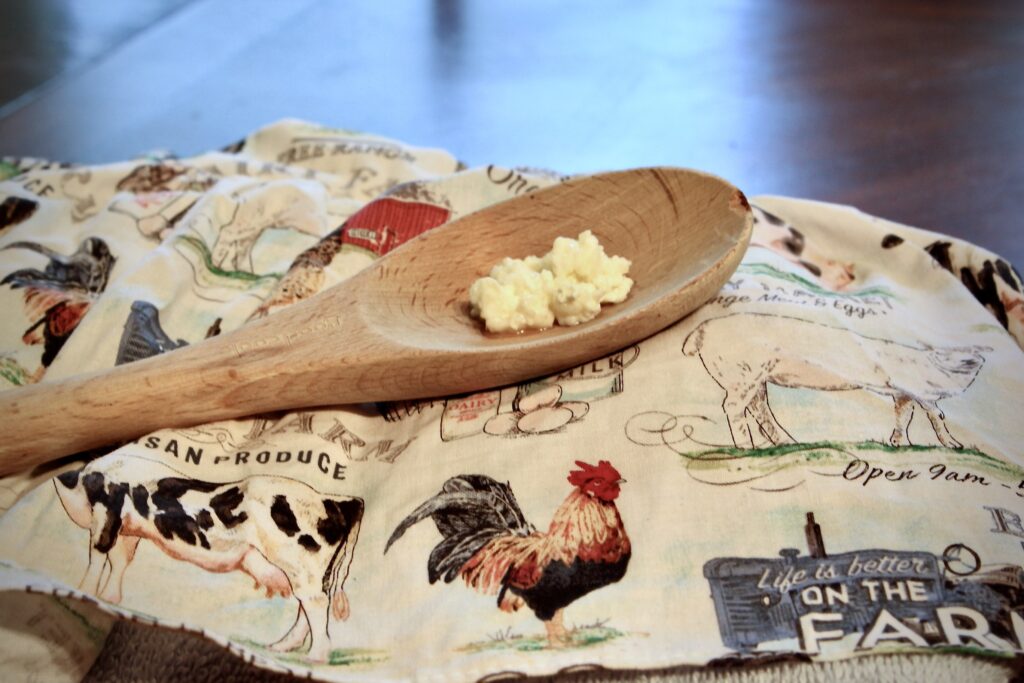
Milk kefir comes from milk fermented with a culture made of grains. A combination of yeast and bacteria and stick together due to caseins or milk proteins and complex sugars, forming the culture. Kefir is the only milk culture that forms grains.
Kefir also creates a mucus-like byproduct that helps create a good environment for helpful organisms/bacteria in the gut.
Where do I get kefir grains from?
I ordered my grains from Homegrownhealth on Etsy and have been happy with the purchase. Other options include live kefir grains on Amazon.
What do I need to make my own kefir?
- ½ gallon mason jar
- Small mason jar to store grains when not fermenting
- Strainer
How do I make my own kefir?
- Put milk into glass jar, if you would like thicker kefir, you can add extra cream
- Add in kefir culture
- Put lid on top loosely or use cloth over the top
- Leave it out anywhere from 12-36 hours
- I tend to leave mine out for about 12 hours now. It is hot where I live in the summer and my husband prefers it less sour. But the longer you ferment, the more tanginess and sourness you get
- If you leave it out too long, you can get a reduction in nutrients and flavor as the bacteria will start to die
- Afterwards, you can do a second ferment by removing the grains and storing the jar with an airtight lid for a minimum of two days or up to two weeks in the fridge. This increases B vitamins and folic acid in the kefir.
How long can I store grains in the fridge?
You can always transition the grains straight into the next batch of kefir. However, since it is just my husband and me, we do not use enough kefir to make it each day. So I store my grains in a small mason jar in the fridge with some milk to cover them. There are mixed suggestions about length of time to refrigerate kefir for, but most sources tend to agree that grains can be stored up to 2-3 weeks in the fridge.
How do I introduce kefir to my diet?
For those just starting out with probiotics, sources often recommend starting with ½ cup. Starting with smaller amounts allows for your gut to grow used to all of the probiotics in the kefir. When you are comfortable you can up the amount. Generally recommendations include keeping the addition of kefir to your diet the only change you make that week.
What type of milk do you use for kefir?
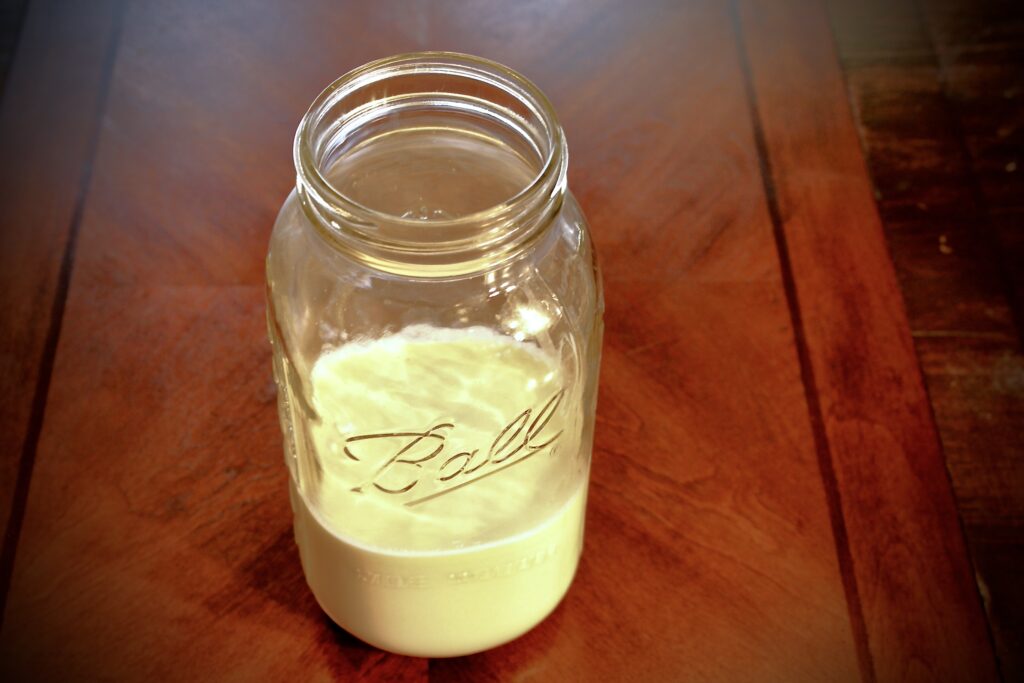
You can make kefir using cow or goat’s milk. The goat’s milk leads to a thinner end product and cow’s milk leads to a thicker product. I tend to use raw, whole cow’s milk from a local farm as it has more nutrients than store-bought milk. Ultra-pasteurized milk should not be used as it tends to have less nutrients for bacteria to consume (as well as people!). I would also recommend organic milk to avoid any chemicals that may damage the grains.
Can you make non-dairy kefir?
Yes, you can find recipes online for water kefir, and there are options to make it with coconut milk. The grains must occasionally be returned to cow’s milk to keep the grains healthy.


Leave a Reply