
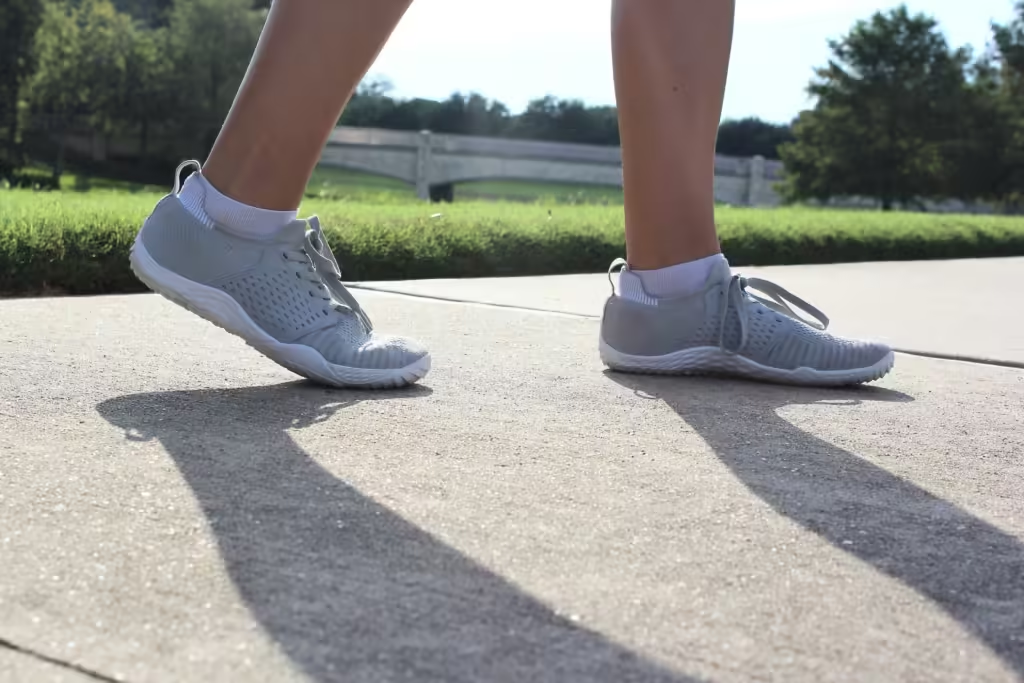
Discover the barefoot shoe benefits for foot health. Depending on your own abilities, priorities and goals, your foot health benefits more from either barefoot or stability shoes. Recently, a controversy has heated up between barefoot shoe afficionados and orthopedic or stability-type shoe promoters. Running through the arguments on both sides can help with making decisions that are best for your feet.
What are Orthopedics/stability Shoes Pros and Cons?
Orthopedic shoes are used to support the arch, entire foot, and even the entire body by keeping the body in proper alignment. They offer good support and cushioning from the ground. Stability shoes ensure that the entire legs from the hips to the feet are in proper alignment. This also ensures proper gait mechanics.
Cons of stability shoes are narrow toe boxes that prevent full range of motion of the toes and feet. This often prevents the wearer from using all muscles within the foot, or intrinsic foot muscles. This can lead to altered gait mechanics and eventual changing of the shape of the foot. Stability shoes can also cushion your feet so much that when worn frequently, they reduce the ability of your feet to tolerate harder or rough surfaces without pain.
When using a shoe that focuses on stability, ensuring that the toe box is as wide as possible will mitigate some of the restrictive effects of the shoe.
What are Barefoot Shoes Pros and Cons?
Barefoot shoes focus on allowing the toes to spread and allowing the wearer to use the muscles within their feet and toes as well as allowing the full range of motion. They also promote activation and use of nerves as well as proprioception by increasing the feel of the ground under the foot. Proprioception is the ability of the body to know where it is at in space.
However, if the feet and toes are not used properly, they often create improper form during walking. This means that they potentially contribute to arthritis or wear and tear on the foot. Barefoot shoes also require the patient to adjust to decreased support and need transitioning into. Therefore, I would not recommend using barefoot shoes straight away in strenuous activities. Examples include a job with eight hours of standing or returning to the patient’s prior training plan for a high impact activity such as running due to the potential for injury due to overload.
How do I know if I would improve my foot health with barefoot shoes?
As a physical therapist, I see patients come in who could benefit from either stability shoes or barefoot shoes. The key to barefoot shoes is to put in the work of strengthening the foot and leg muscles as well as improving mechanics consistently. This requires the patient to practice frequently until the new way of walking becomes second nature.
To me, the ideal is to closely mimic how humans were built to move, which would mean barefoot shoes. However, extenuating circumstances prevent this, such as improper foot structure, lifestyle, work, surfaces, or other problems our ancestors did not have. These problems limit the ability of some to use barefoot shoes or may require a compromise of shoes with support but a wide toe box.
How do I transition into barefoot shoes?
- Gradually move into higher impact activities into the shoes
- Start with walking or standing for 1-2 hours in your barefoot shoes
- Slowly increase the time spent in the shoes and the intensity of your activities until you perform all your usual activities with the shoes on with minimal symptoms
- Ice and rest as needed to in the evenings to reduce any inflammation or muscle soreness caused by the new shoes
- Perform exercises focusing on foot and toe mobility as well as hip strength to reduce impact and improve control of muscles
What are some good exercises to improve my foot health and transition into barefoot shoes?
Some exercises include:
Toe Extension:
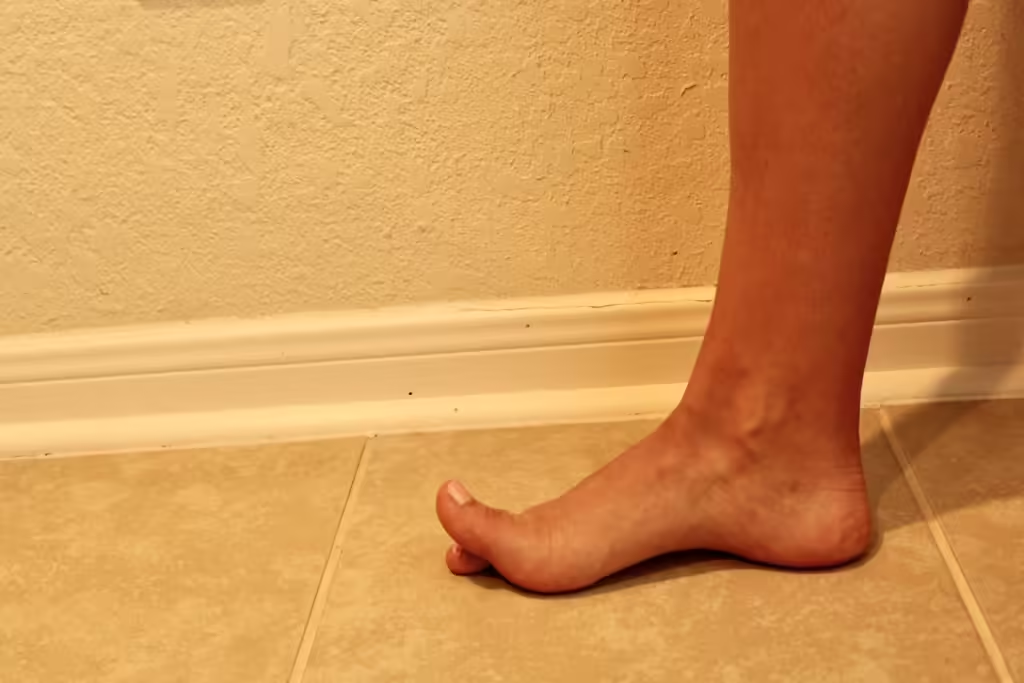
While in standing, lift your big toes straight up from the ground while keeping your little toes on the ground. Hold three seconds and then relax. Perform 20-30 times.
Foot Arches:
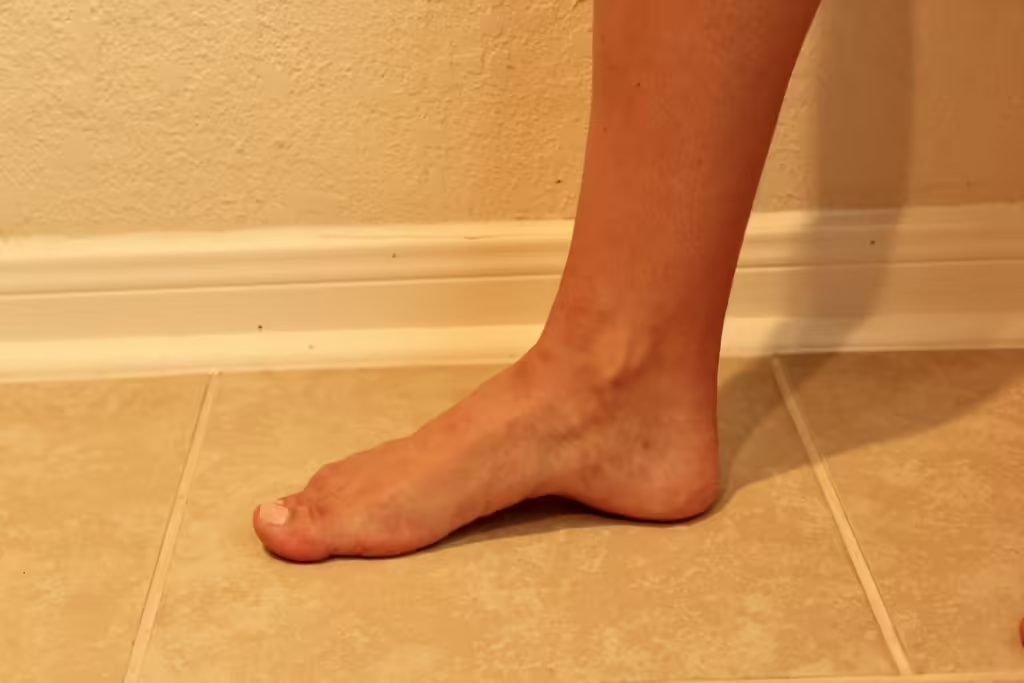
Practice maintaining your arches and supporting the rest of your foot. Stand and squeeze your arches while keeping your toes and balls of your feet from lifting up or curling under your foot. Hold three seconds, and then relax, performing 20-30 times on each foot.
Fire hydrants:
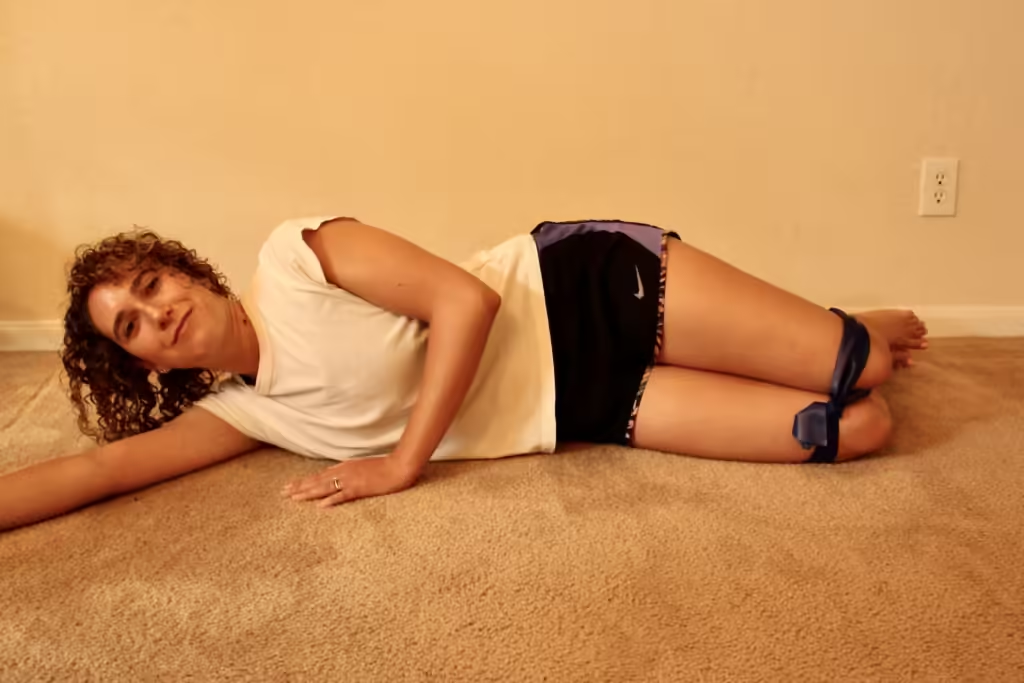
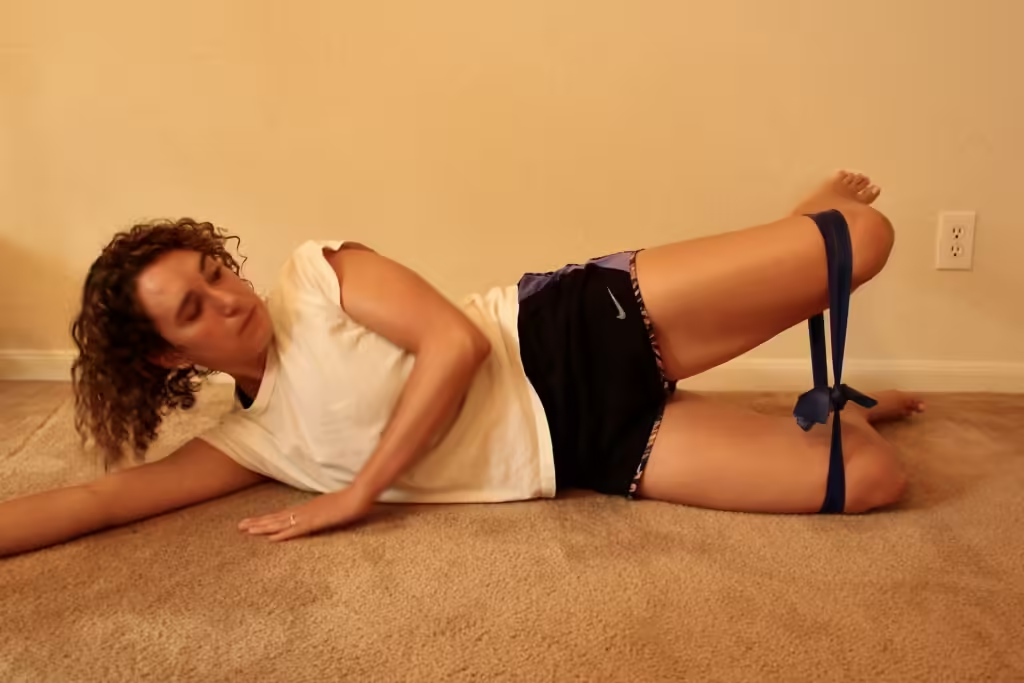
Lay on your side with your legs bent and a band above your knees. Roll your pelvis forward like you are starting to roll to your stomach but not fully rolling over. Lift your top leg fully, always keeping your ankle lower than or equal to your knee. Maintain your hip position. Hold three seconds and perform 20x/side.
Standing side kicks:
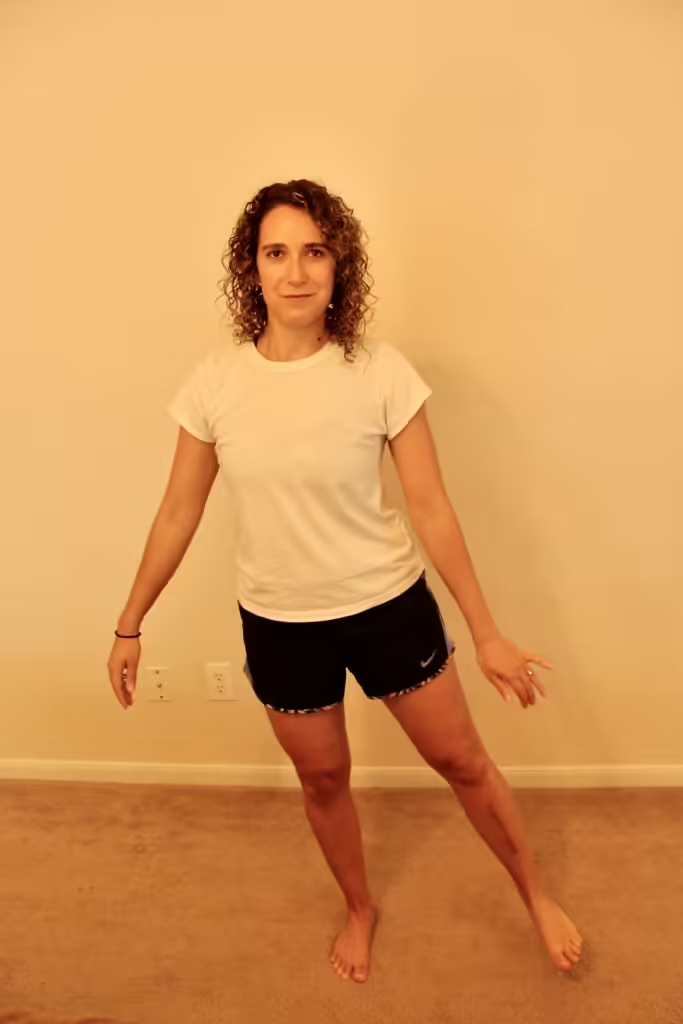
Stand up straight with a counter for support below your hands if needed. Make an arch with one foot and kick the other foot in a small kick straight to the side. Hold three seconds with the goal of not using your hands. If you think you may fall, use your fingertips to balance. Then bring foot back in and switch sides, alternating 20x/side.
Standing calf stretch:
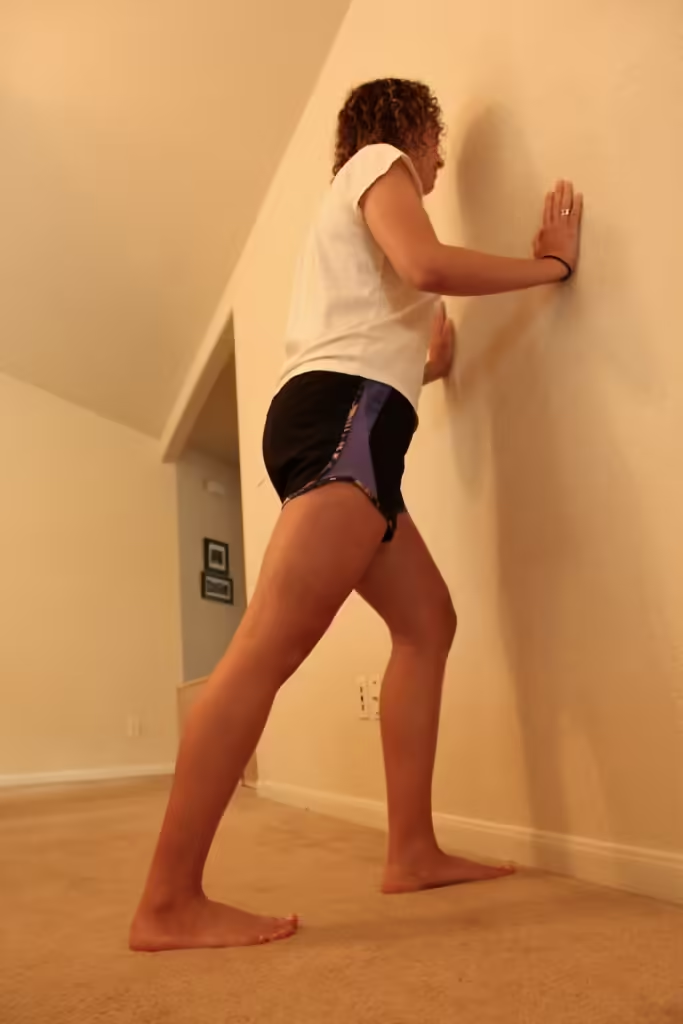
Keeping your front leg bent and back leg straight, face the wall with your hands on it. Lean into the wall until you feel a stretch, keeping the back leg straight. Do not allow your heel to rise. Hold 30 seconds, and perform 3x/side.
How to walk using proper muscles:
When walking, make sure that your big toe is the last part of your foot to leave the ground behind you. Push off with the big toe of the foot in the back. This will help activate your glute muscles, but go ahead and give the glute muscle of the leg you are pushing off with a squeeze. Eventually, you will not have to actively squeeze, your muscle will feel like it is used every time you walk. This creates support up and down the leg.
What are good brands for barefoot shoes and are they expensive?
There are a wide range of brands and costs of barefoot shoes. One site, called Anya’s Reviews, features many different brands, styles, and price ranges of barefoot shoes. Wide toe boxes and barefoot-type shoes are available in sandals, sneakers, ballet flats, and other shoe styles with wide toe boxes. It takes time to discover which brand works for your foot, as all feet are shaped slightly differently. I currently use a brand called Whitin. They work well for beginners as they have a transition shoe with a small insole and start around $35-40.
Would someone from a foot condition such as plantar fasciitis, Achilles tendonitis. or other foot/ankle conditions benefit from barefoot shoes?
Of course, those with foot conditions such as plantar fasciitis or Achilles tendonitis may benefit from barefoot shoes. However, sometimes the shoes do not work well initially even with the advice and exercises above to ease transition. At this time, you may benefit from seeing a physical therapist to get your specific impairments and difficulties tested. The therapist creates a personalized plan of care. Problems such as recurrent ankle sprains may require gradual reduction of support and continued strengthening of the foot and ankle prior to transitioning into barefoot shoes.
Are barefoot shoes recommended for running?
For runners, barefoot shoes are a type of shoe that can be transitioned into. However, one may need to avoid running on pavement in barefoot shoes. Our ancestors commonly ran on softer surfaces such as dirt and grass. Therefore, running on pavement often causes higher impacts than our joints and bodies tolerate easily. However, it is possible to move into barefoot running gradually while ensuring that muscles are properly activated and using correct form.
Advocates for barefoot running contend that without shoes, your joints such as your knees help by increasing their support and absorption, providing cushioning that your shoes no longer do. Another point made by various barefoot runners is that without supportive shoes, you may naturally decrease your step length which will lead to less impact on the heel.
Are barefoot shoes recommended for improved foot health while lifting?
For lifting, the biggest consensus concludes that people need a wide toe box to allow the toes to spread out and prevent pinching, allowing for optimal toe mobility, stability and balance during lifts, as well as maintaining a proper arch, even body weight spread, and control of your lower body. Barefoot shoes have the wide toe box and allow for a better feel for the ground. However, the shoe’s support needs to not disconnect the foot entirely from the ground. So, barefoot shoes work better for some people than others. Personal preference can be a deciding factor.
Barefoot vs. Minimalist shoes
Minimalist shoes have less restrictions and wider toe boxes as compared to regular stability shoes but have more support than barefoot shoes. They work well if you want more support on harder surface but still want mobility to use the proper muscles in your feet and toes.
One note if you do a lot of running or high impact activities:
Traditionally, people who went barefoot were not running on pavement. Considering wearing some form of support for any running, jumping, or high impact activity on pavement may be wise.


Leave a Reply